
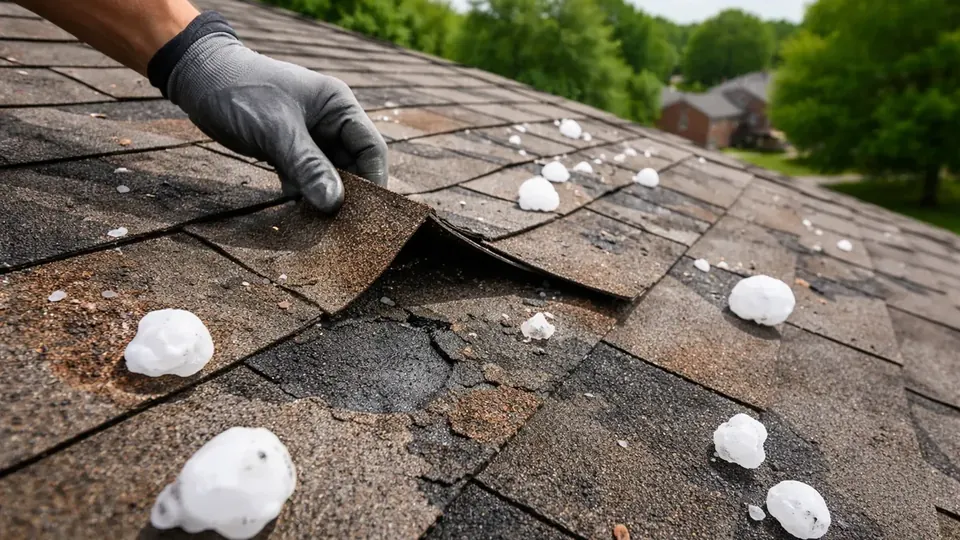
Roof damage insurance claims in San Antonio usually start with weather. Bexar County has logged 618 hail reports and 309 thunderstorm wind reports in the NOAA Storm Events Database, and roofs absorb most of that punishment. A roof claim can look simple from the ground and turn complicated on the roof: the insurer's estimate may cover a few shingles while the property owner sees a roof that needs replacing.
This page walks through how roof claims work, the policy terms that shape what gets paid, and where a public adjuster in San Antonio may help. If hail is the cause, our San Antonio hail damage claims page goes deeper on storm dating and hail-specific disputes.
Roof Types We See Around San Antonio
Different roofs fail in different ways, and insurers look for different things on each.
| Roof type | Common storm damage | Common dispute |
|---|---|---|
| Composition (asphalt) shingle | Bruising, fractured mats, granule loss, creased or missing tabs | Hail vs. wear and tear; repair vs. replace; matching |
| Standing-seam metal | Dented panels, damaged trim and flashing, loosened fasteners | Cosmetic damage exclusions |
| Tile (clay or concrete) | Cracked or broken tiles, damaged underlayment | Availability and matching of replacement tiles |
| Flat / low-slope commercial (TPO, modified bitumen, built-up) | Punctures, split seams, wet insulation | Moisture surveys; whether the membrane can be patched |
Composition shingles are the most common roof in the area. Standing-seam metal becomes more common toward the Hill Country edge in places like Boerne and Helotes. Older homes in historic districts such as King William, Monte Vista, and Tobin Hill may have older roof decks and multiple layers that complicate a tear-off.
What Causes Covered Roof Damage
- Hail. NOAA recorded hail up to 4.5 inches across northwest San Antonio on April 12, 2016 (NCEI event record), one of the costliest hailstorms in Texas history.
- Wind. On February 19, 2017, thunderstorm winds estimated at 70 mph tore part of the roof off a house near the Olmos Basin in northern San Antonio (NCEI). See wind damage claims.
- Falling trees and limbs during storms or ice events.
- Ice accumulation on gutters and limbs during freezing rain.
Roof leaks caused by age, deterioration, poor installation, or lack of maintenance are generally excluded. When the insurer and the owner disagree about cause, the evidence on the roof matters most.
How Insurers Value a Roof Claim
Repair vs. replacement
Insurers often start with a repair estimate. Whether a full replacement is warranted can depend on how many slopes are damaged, whether brittle shingles can be lifted and replaced without breaking neighbors, and whether matching materials are available.
Actual cash value and depreciation
Under a replacement cost policy, the insurer typically pays actual cash value first (replacement cost minus depreciation) and releases recoverable depreciation after repairs are complete, often within a deadline in the policy. Some Texas policies cover roofs on an ACV-only basis or use a roof payment schedule based on age. Read more in replacement cost vs. actual cash value in Texas.
Deductibles
Wind and hail roof claims often fall under a separate percentage deductible based on the dwelling limit. Bexar County is not in the TWIA area, so these deductibles come from your regular homeowners or commercial policy. Check your declarations page.
Code and permit items
Re-roofing inside city limits generally requires a permit from the City of San Antonio Development Services Department, and the work must meet the city's adopted International Residential Code and International Building Code. Code-required items are paid only to the extent your policy includes ordinance or law coverage. See local building codes.
Line Items Often Missing From Roof Estimates
When we review a roof estimate, these items come up repeatedly:
- Starter course, drip edge, and ridge cap
- Step flashing, counter flashing, and pipe jacks
- Underlayment and ice-and-water barrier where required
- Additional layers to tear off and decking replacement
- Steep and high-roof charges, and permit costs
- Gutters, downspouts, and roof vents damaged in the same storm
Our insurance estimate review compares the insurer's scope against the actual roof. If a claim was paid but left items out, an insurance claim supplement may be appropriate.
How a Public Adjuster Helps With Roof Claims
San Antonio Public Adjuster represents the policyholder, not the insurer. On a roof claim, that may include inspecting each slope, photographing and measuring damage, reviewing your policy and endorsements, preparing a line-item estimate in Xactimate, and meeting the insurer's adjuster on the roof. If the disagreement is about the amount of loss rather than coverage, we can explain whether the appraisal clause may apply.
A public adjuster does not repair roofs. Texas conflict-of-interest rules under Insurance Code Chapter 4102 bar a public adjuster from taking part in repairs on a claim they adjust, so your roofer remains your choice. Fees are disclosed in a written contract before any work begins; Texas law caps public adjuster compensation at 10% of the insurance settlement. No one can guarantee a particular result.
When the Insurer Says the Damage Is Old
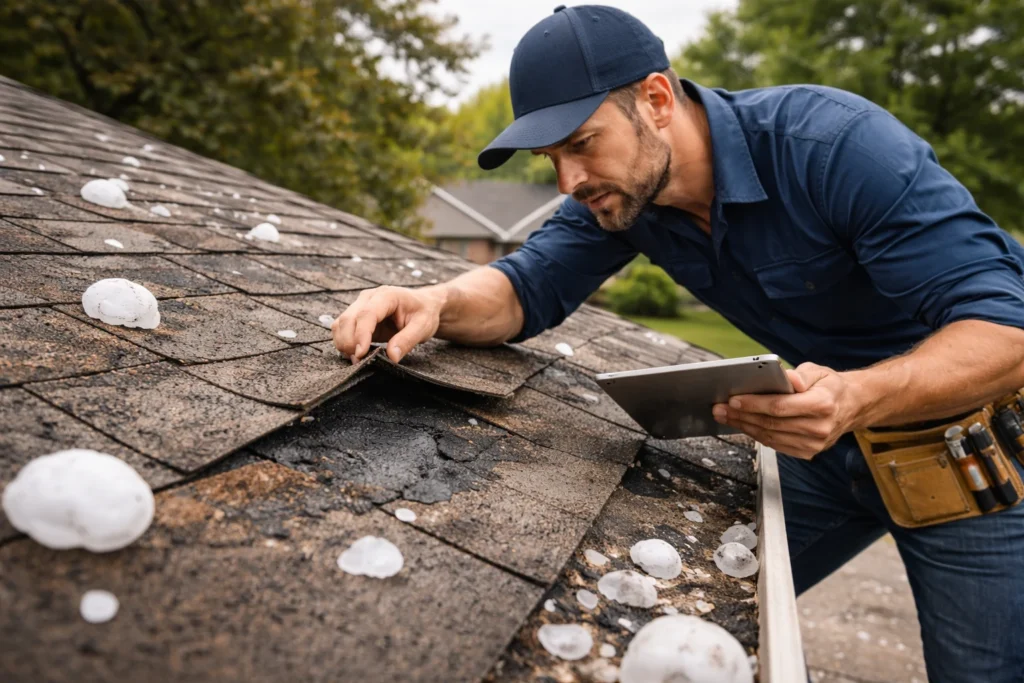
A frequent roof denial says the damage is from wear and tear, or from a storm before the policy started. San Antonio's summer heat does age shingles, and some neighborhoods see hail more than once in a season, so the insurer's argument is not always unreasonable. The answer is evidence: dated photos of the roof before and after the storm, NOAA reports near the address, fresh exposed mat at impact points, and matching marks on gutters, vents, and AC fins. If you never photographed the roof before the storm, older listing photos, satellite imagery, or a prior inspection report can sometimes fill the gap.
Commercial and Multi-Family Roofs
Flat and low-slope roofs on retail centers, offices, warehouses, and apartment buildings are harder to evaluate because damage to the membrane may not be visible. Wet insulation under an intact-looking surface can spread and fail later. Core samples and moisture surveys are often part of documenting these claims, and the policy's business income coverage may come into play if the building cannot be used.
Steps to Take After Roof Damage
- Photograph the roof, gutters, and any interior stains from several angles.
- Tarp any opening that lets water in and save the receipt.
- Report the claim promptly and write down the claim number.
- Pull your declarations page and look for roof schedules or cosmetic exclusions.
- Be present for the inspection, or have your representative there.
- Get the insurer's estimate in writing and review it line by line.
Frequently Asked Questions
Does homeowners insurance cover an old roof?
Age alone does not usually void coverage, but it affects how the roof is valued. Many policies apply depreciation, and some Texas policies pay roofs on an actual cash value basis or a payment schedule tied to roof age. Wear and tear itself is generally excluded. Your declarations page and endorsements tell you which rules apply.
What happens if my shingles are discontinued and cannot be matched?
Matching is one of the most common roof disputes. How it is handled depends on the policy language and the facts. Documenting the shingle type, the manufacturer, and why a repair cannot blend in helps the discussion with the insurer.
Do I need a permit to replace my roof in San Antonio?
Re-roofing generally requires a permit from the City of San Antonio Development Services Department. Suburban cities such as Alamo Heights, Leon Valley, Schertz, and Boerne have their own permit offices. Confirm with the office that covers your address.
Will my insurance pay for code upgrades on a new roof?
Only if your policy includes ordinance or law coverage, and only up to that limit. Code requirements do not automatically make the insurer responsible for the upgrade cost. See our local building codes page.
Can I use any roofer I want?
Generally, yes; you choose who repairs your property. Note that a Texas public adjuster may not take part in repairing a property on a claim they adjust, so your adjuster and your roofer will be separate companies.
Should I tarp the roof before the adjuster comes?
Yes, if there is an opening that lets water in. Policies require reasonable steps to prevent further damage. Photograph the damage first, keep the receipts, and do not make permanent repairs until the insurer has had a chance to inspect.