
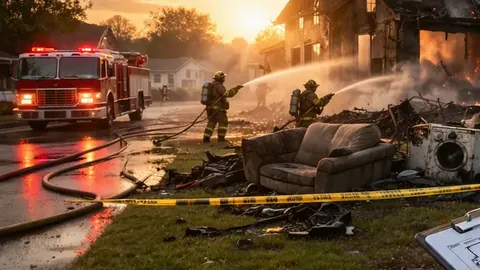
Smoke damage claims in San Antonio often start small and grow. A kitchen fire, an electrical fire in a wall, or a fire in a neighboring unit can leave the burned area confined to a few square feet while fine soot and odor spread through the whole building. Smoke residue settles on walls, ceilings, cabinets, clothing, and electronics, works into porous materials like drywall and upholstery, and gets pulled through the HVAC system into rooms that never saw a flame. Because the damage is less visible than charred framing, it is one of the most frequently underestimated parts of a fire claim.
This page explains how smoke claims work, what insurers usually propose, and how a public adjuster in San Antonio can help document the full extent of smoke and soot damage. If your home also has structural fire damage, see fire damage claims.
Where Smoke Damage Hides
- Inside closets and cabinets, where soot settles on stored items and shelving.
- Attic insulation and framing, which absorb odor and can hold fine particles.
- HVAC systems: air handlers, coils, flexible and metal ductwork, and returns.
- Electronics and appliances, where acidic soot can affect circuit boards over time.
- Textiles: carpet, drapes, upholstery, bedding, and clothing.
- Wall cavities and electrical boxes, especially near the origin of an electrical fire.
- Exterior surfaces: stucco, painted trim, and soffits stained by smoke from a nearby fire.

Smoke Damage in San Antonio Homes and Businesses
Local construction affects how smoke behaves. Many San Antonio homes have attic air handlers and flexible ductwork running through hot attics, so a fire anywhere in the house can load the whole duct system with soot. Older homes in historic districts such as King William, Monte Vista, and Tobin Hill may have plaster walls, original wood trim, and pier-and-beam crawl spaces where odor lingers and finishes are expensive to restore. Exterior limestone and stucco are porous and can stain when a nearby structure burns.
For businesses, smoke can be as costly as the fire itself. Restaurants, retail stores, and offices may need to discard smoke-exposed inventory, food, and supplies, clean or replace ceiling tiles and HVAC components, and close while the space is restored. Business income coverage, when it applies, may help with lost income during that time. See commercial property claims, or residential property claims for homeowners and landlords.
Clean, Seal, or Replace?
Most smoke disputes come down to this question. Insurers often start with cleaning, which is appropriate for many surfaces. When cleaning does not remove residue or odor, replacement may be needed.
| Item | Often cleaned when | Replacement may be needed when |
|---|---|---|
| Painted walls and ceilings | Light residue that wipes off | Heavy soot, staining, or odor that returns after sealing and painting |
| Insulation | Rarely cleaned | Smoke odor or soot in attic or wall insulation |
| Carpet and pad | Light smoke exposure | Heavy soot, odor, or water from firefighting |
| Ductwork | Metal ducts with light contamination | Flexible duct with soot inside, or odor that persists |
| Clothing and textiles | Items that respond to professional cleaning | Items that remain stained or smell after cleaning |
| Electronics | Units tested and working after cleaning | Units with corrosion or failure after exposure |
The deciding factor is whether the item is actually restored to its pre-loss condition. Photos before and after cleaning, odor notes, and contractor opinions help support replacement where cleaning falls short.
Coverage Questions Specific to Smoke
Smoke from a neighboring property
In duplexes, townhomes, apartment buildings, and shopping centers, smoke from a fire in another unit often reaches yours. Your own policy usually responds to damage to your property and belongings. Renters' policies typically cover the tenant's contents and loss of use, while the building owner's policy covers the structure.
Wildfire and outdoor smoke
Smoke that drifts in from a grass or brush fire can raise harder questions, especially when the damage is mostly odor or fine residue. Coverage depends on policy wording and on showing physical damage, so document residue on surfaces and filters soon after the event.
Common exclusions
Many policies exclude smoke from agricultural smudging or industrial operations, and damage from long-term sources such as candles, fireplaces, or tobacco use is generally not treated as a sudden loss. Mold or water damage that follows firefighting may fall under separate provisions; see water damage claims.
Timing Matters With Smoke
Soot residue can become harder to remove the longer it sits, and some residues can etch or discolor surfaces over time. Report the claim promptly, ask the insurer whether it will authorize emergency cleaning, and keep the mitigation company's notes on what was done and when.
Documenting a Smoke Claim
- Photograph every room, including inside closets, cabinets, and the attic, before cleaning starts.
- Wipe-test surfaces with a white cloth and photograph the residue in each room.
- Note where odor is present and how strong it is, room by room.
- Keep HVAC filters removed after the fire as evidence of soot in the system.
- Keep a contents list noting which items were cleaned, and the results.
- Save all invoices for cleaning, deodorization, and temporary housing.
Our claim documentation checklist has a printable version of these steps.
How a Public Adjuster Can Help With Smoke Damage
San Antonio Public Adjuster represents policyholders, not insurers. On a smoke claim, we may walk every room to map how far smoke traveled, photograph and document residue, review the insurer's cleaning scope against the actual conditions, prepare a line-item estimate for cleaning, sealing, painting, and replacement in Xactimate, and help organize the contents claim. If the insurer's estimate leaves items out, we can request a supplement through the insurance claim supplements process, and if the disagreement is about the amount of loss, the appraisal clause may be an option.
No one can guarantee how an insurer will respond; coverage depends on your policy and the facts. Fees are disclosed in a written contract before any work begins; Texas law caps public adjuster compensation at 10% of the insurance settlement. We serve homeowners, landlords, and business owners throughout San Antonio, Bexar County, and surrounding communities.
Frequently Asked Questions
Is smoke damage covered if the fire did not reach my room or my home?
Many property policies cover sudden and accidental damage from smoke, even where there was no fire in that room. Coverage for smoke from a fire at a neighboring property also often applies. Policies commonly exclude smoke from agricultural smudging or industrial operations, and wording varies. Read the smoke peril in your policy.
Why does the insurer want to clean items instead of replacing them?
Cleaning is often less expensive, and many items can be restored. The question is whether cleaning actually removes the residue and odor. If cleaned items still smell or are stained, document that and ask the insurer to reconsider.
Should my air ducts be cleaned or replaced after a fire?
It depends on the duct material, how much soot entered the system, and whether cleaning can remove residue and odor. Flexible ductwork common in attics can be hard to clean. A qualified HVAC or restoration contractor’s written opinion helps support the scope.
Do I need lab testing for smoke damage?
Not always. For disputed or widespread losses, surface sampling for soot, char, and ash can help show how far residue traveled, especially in areas far from the fire. Ask before ordering testing, and keep the results.
Is smoke odor alone a covered loss?
Persistent smoke odor is often treated as part of the physical damage from a covered smoke event, but this depends on policy language and the facts. Document when and where the odor is present, before and after cleaning.
How much does a public adjuster charge for a smoke claim?
Fees are disclosed in a written contract before any work begins. Texas law caps public adjuster compensation at 10% of the insurance settlement, and you may rescind the contract within 72 hours of signing.