
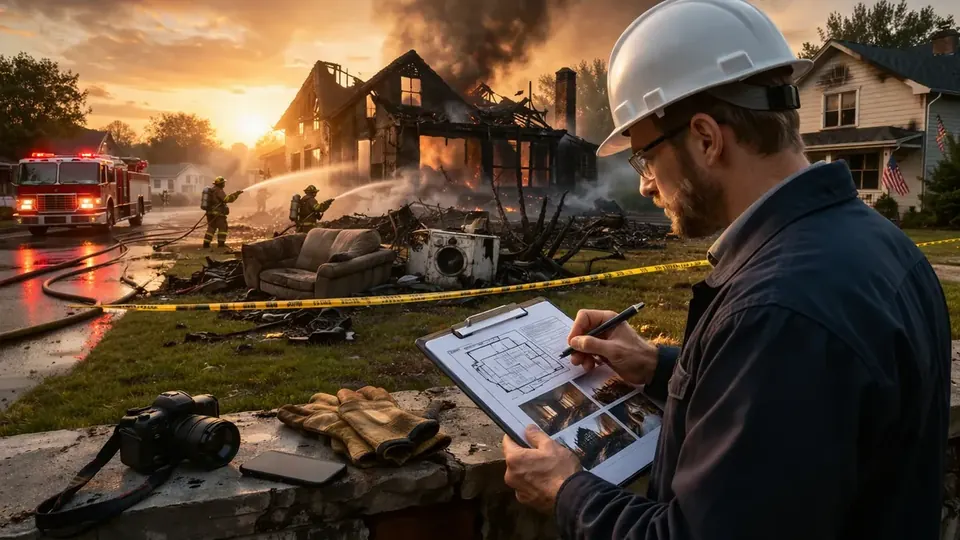
Fire damage claims in San Antonio are some of the most complex property insurance claims a homeowner or business owner will ever face. Even a small kitchen fire can send smoke and soot through the HVAC system into every room, and the water used to put out a fire often does as much damage as the flames. A larger fire can involve structural rebuilding, permits, months of temporary housing, and an inventory of hundreds or thousands of personal items. All of it has to be documented while the household is trying to get back on its feet.
This page explains what a fire claim usually includes, where disputes arise, and how a public adjuster in San Antonio may help. For more on choosing representation, see our article on working with a fire insurance adjuster.
What a Fire Claim Usually Includes
| Coverage | What it typically pays for |
|---|---|
| Dwelling (Coverage A) / Building | Structural repairs, framing, roofing, drywall, electrical, plumbing, HVAC, finishes |
| Other structures (Coverage B) | Detached garages, sheds, fences, and carports damaged by the fire |
| Personal property (Coverage C) / Contents | Furniture, clothing, electronics, appliances, and other belongings; cleaning or replacement |
| Loss of use (Coverage D) / Business income | Additional living expenses while the home is unlivable; lost income for businesses |
| Debris removal | Removal of burned materials, often subject to a separate limit |
| Ordinance or law | Code-required upgrades during repairs, up to the coverage limit if purchased |
Coverage names and limits vary by policy. Commercial policies use different forms, but the same categories usually apply. See commercial property claims for business losses.
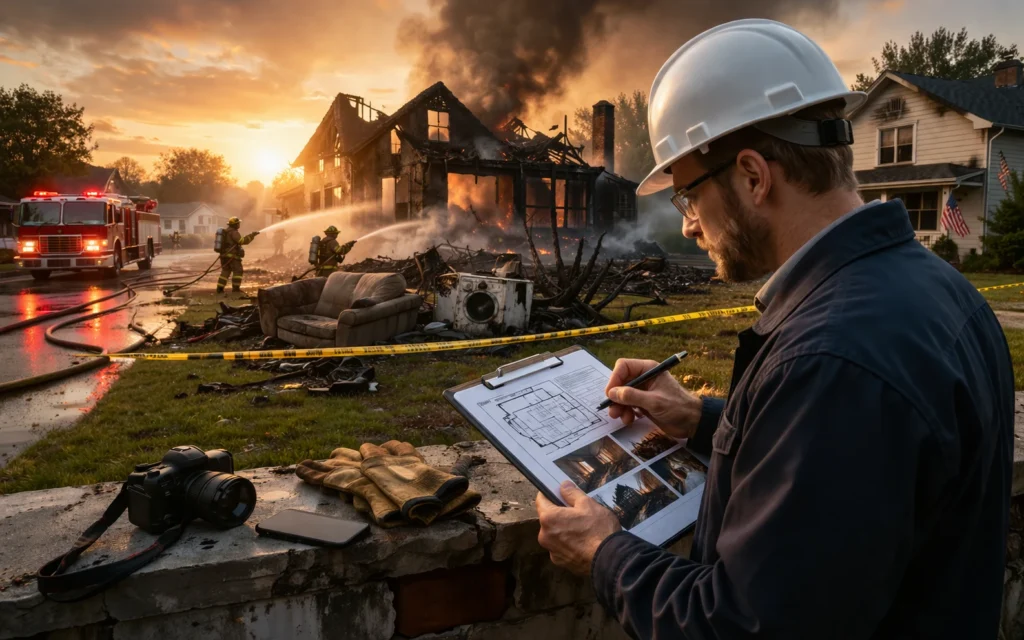
Damage That Is Easy to Miss
The burned area is obvious. These items are often underestimated or left out of the first estimate:
- Smoke and soot in rooms the fire never reached, inside cabinets, closets, and wall cavities. See smoke damage claims.
- HVAC contamination. Ductwork, air handlers, and returns can spread soot and odor through the whole building.
- Water from firefighting. Wet drywall, insulation, subfloor, and flooring need drying or replacement, and mold can follow if drying is delayed. See water damage claims.
- Heat damage. Warped windows, melted wiring insulation, cracked tile, and damaged roof decking near, but not in, the burn area.
- Electrical systems. Wiring exposed to heat or water may need inspection and replacement, and CPS Energy service may need to be restored after inspection.
- Odor. Smoke odor can remain in framing and porous materials after surface cleaning, which affects whether materials should be cleaned or replaced.
Local Construction and Rebuilding Issues
San Antonio's housing stock affects fire claims. Older pier-and-beam homes in historic districts such as King William, Monte Vista, and Tobin Hill can have original wood framing, plaster walls, and features that are expensive to match, and exterior changes in designated historic districts may need city historic review in addition to a building permit. Newer slab-on-grade homes with stucco, limestone, or brick veneer may have masonry that survived the fire while the framing behind it did not. Repairs inside city limits generally require permits through the City of San Antonio Development Services Department and must meet the city's adopted International Residential Code and International Building Code. Suburban cities such as Alamo Heights and Schertz have their own permit offices. See local building codes.
Common Fire Claim Disputes
- Clean vs. replace. Insurers often propose cleaning smoke-affected materials and contents; owners may find that odor and residue remain.
- Scope of repairs. The estimate may cover only the burned room, not adjacent areas affected by heat, smoke, or water.
- Contents depreciation. Personal property is often paid at actual cash value first, with replacement cost released after items are replaced, if the policy provides it. See replacement cost vs. actual cash value.
- Living expense duration. Disagreements about how long repairs should reasonably take.
- Underinsurance. When the dwelling limit is lower than the actual rebuilding cost, the policy limit caps what can be paid.
Lightning, Wildfire Smoke, and Other Causes
Not every fire claim starts in the kitchen. Lightning strikes during spring thunderstorms can start attic fires or damage electrical systems and equipment without visible flames. Fires that start at a neighboring property can damage your home through radiant heat and smoke. Each of these is usually handled under the same fire, lightning, or smoke perils of your policy, but documenting the cause and the date is important, especially when a lightning strike damaged electronics or HVAC equipment rather than the structure.
Proof of Loss and Insurer Timelines
Many policies require a sworn proof of loss within a stated time after the insurer asks for one. Under the Texas prompt-payment rules in Insurance Code Chapter 542, an insurer generally must acknowledge a claim and request the information it needs within 15 days, then accept or reject the claim within 15 business days after receiving everything it requested, unless it explains why it needs more time. A large fire claim may be paid in stages: an advance for living expenses, then building and contents payments as each is agreed. If your claim has stalled, see delayed insurance claims.
How San Antonio Public Adjuster Can Help
San Antonio Public Adjuster represents the policyholder, not the insurer. On a fire loss, we may document the structure room by room (including Matterport 3D imaging where useful), prepare a line-item building estimate in Xactimate, help organize the contents inventory, track additional living expenses, and communicate with the insurer's adjuster so you are not managing every call yourself. If the insurer's estimate leaves out smoke, water, or code items, we can respond with documentation, and if the dispute is over the amount of loss, we can explain how appraisal may apply.
We cannot guarantee a result; coverage and payment depend on your policy and the facts. Fees are disclosed in a written contract before any work begins; Texas law caps public adjuster compensation at 10% of the insurance settlement. Texas also gives you 72 hours to rescind a public adjuster contract after signing.
First Steps After a Fire
- Make sure everyone is safe and do not enter until the fire department says it is safe.
- Report the claim and ask the insurer about emergency living expenses.
- Get a copy of the fire department incident report.
- Secure the property: board-up, tarping, and fencing if needed. Keep receipts.
- Photograph and video every room before cleanup or demolition.
- Start a contents list and save receipts for everything you have to buy.
Frequently Asked Questions
What does homeowners insurance cover after a house fire?
Most homeowners policies cover fire damage to the dwelling, other structures, and personal property, plus additional living expenses (loss of use) while the home is unlivable, each up to its own limit and subject to the deductible and exclusions. Your declarations page lists each limit.
How long will the insurer pay for temporary housing?
Loss of use coverage generally pays reasonable additional living expenses for the shortest time needed to repair or relocate, subject to the policy limit and any time limit. Keep every receipt for rent, hotels, meals beyond your normal costs, and mileage.
Do I have to list every item that burned?
Usually, yes. Contents claims are typically paid from an itemized inventory with descriptions, ages, and replacement costs. Photos, videos, bank and card statements, and online order history help rebuild the list.
Should I let the insurer’s contractor start demolition right away?
Emergency board-up, tarping, and water extraction should happen quickly. Before major demolition, make sure the damage is documented and that you understand the scope. You are generally free to choose your own contractor.
Will insurance pay for code upgrades when rebuilding?
Code-required upgrades are paid only if your policy includes ordinance or law coverage, and only up to that limit. Repairs inside San Antonio city limits generally require permits from the Development Services Department. See our local building codes page.
Can a public adjuster help if the insurer suspects arson?
A public adjuster can help document the loss, but suspected arson, fraud, or examination under oath raise legal issues. In that situation, talk to a Texas attorney.