Key takeaways
- Repairs inside the City of San Antonio generally require permits and inspections through the Development Services Department (DSD).
- The city adopted the 2024 International Building Code, International Residential Code, and International Existing Building Code, with local amendments, by ordinance on January 30, 2025. The city's Chapter 10 document lists an effective date of May 1, 2025.
- Code requirements can add cost to a repair, such as drip edge, underlayment, or electrical updates.
- Insurance pays for code upgrades only to the extent of your ordinance or law coverage, which is often limited.
- Suburban cities and unincorporated Bexar County have their own permit offices and may use different codes.
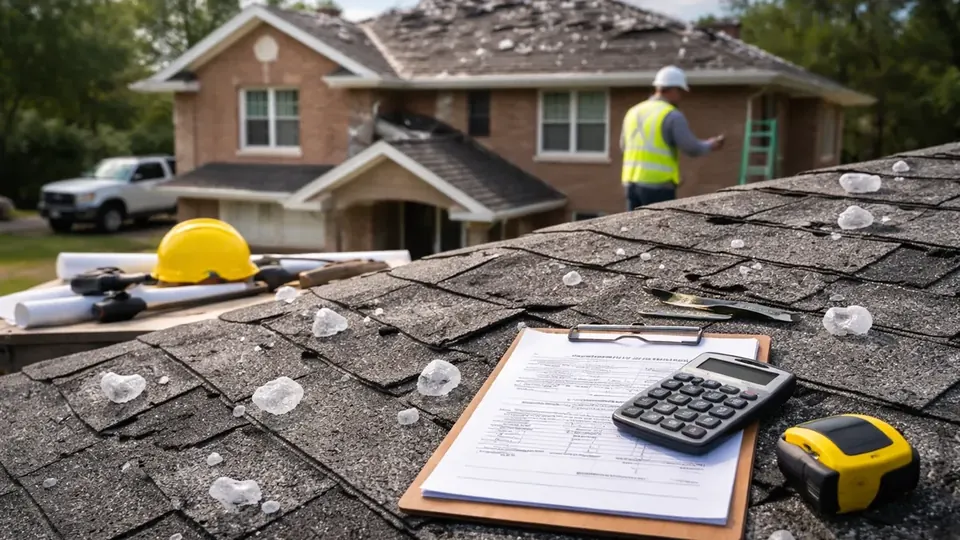
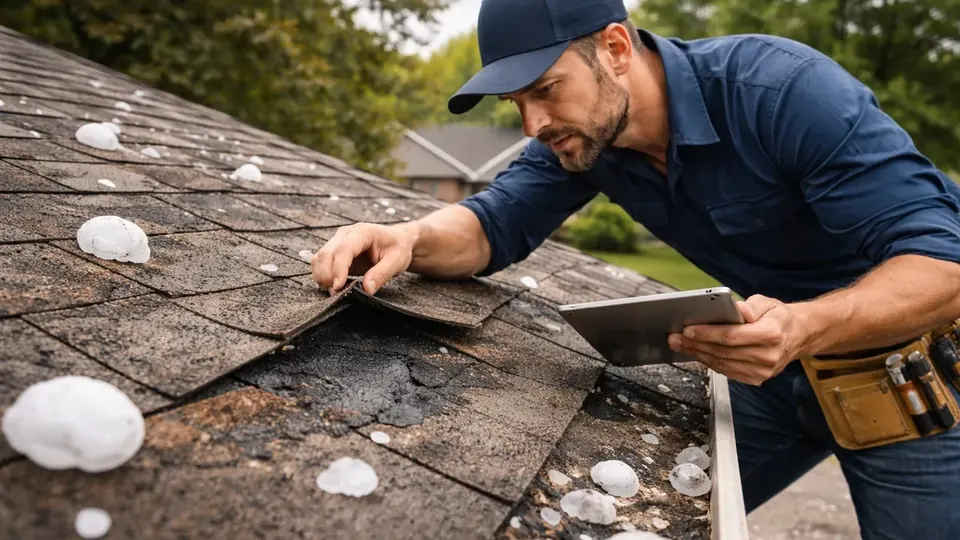
After a hailstorm, windstorm, fire, or burst pipe, most people want the house put back the way it was. But a repair in San Antonio does not just restore what was there. In most cases it has to meet the building codes in effect when the work is done. That is where building codes and insurance repairs collide, and where many claim disputes start.
This guide explains how permits work in San Antonio, which codes the city has adopted, how code requirements show up in a repair, and how ordinance or law coverage determines whether insurance helps pay for them. It is general information, not legal or engineering advice. Confirm requirements with the city and a licensed contractor, and read your own policy.
Permits through City of San Antonio Development Services
Inside city limits, building permits and inspections are handled by the City of San Antonio Development Services Department (DSD), based at the Cliff Morton Development and Business Services Center at 1901 S. Alamo St. Permits are applied for through the city's online portal, BuildSA. Contractors typically handle the application and schedule inspections.
Re-roofing and most structural repairs generally require a permit. The city's own fee schedule includes a "Residential Re-roof Permit," and commercial re-roofs are permitted based on building valuation. Electrical, plumbing, and mechanical work usually require separate trade permits pulled by licensed contractors.
The city's code also lists some work that does not need a building permit, such as painting, papering, tiling, carpeting, cabinets, countertops, and similar finish work, and minor fence repairs. Under the city's code, replacing up to 25 percent of the overall contiguous length of a fence not over six feet high counts as a minor repair. Exempt work still has to comply with the code. Ask DSD or your contractor before assuming a project is exempt.
What codes San Antonio has adopted
According to the city's Chapter 10 Building-Related Codes document, Ordinance No. 2025-01-30-0075, adopted January 30, 2025, reflects adoption of the following, with local amendments:
| Code | Edition adopted |
|---|---|
| International Building Code (IBC) | 2024 |
| International Residential Code for One- and Two-Family Dwellings (IRC) | 2024 |
| International Existing Building Code (IEBC) | 2024 |
| International Mechanical Code | 2024 |
| International Plumbing Code | 2024 |
| International Fuel Gas Code | 2024 |
| International Fire Code | 2024 |
| International Swimming Pool and Spa Code | 2024 |
| International Energy Conservation Code (IECC) | 2021 |
| National Electrical Code (NEC) | 2023 |
Source: City of San Antonio, Chapter 10 Building-Related Codes (document effective date May 1, 2025). Codes and local amendments can change; confirm with DSD before starting work.
Suburban cities such as Alamo Heights, Leon Valley, Schertz, Boerne, and New Braunfels adopt their own codes and run their own permit offices. Unincorporated Bexar County has separate rules. The address of the property decides which jurisdiction applies. For more local detail, see our local building codes page.
Where codes and claims meet
Roofs
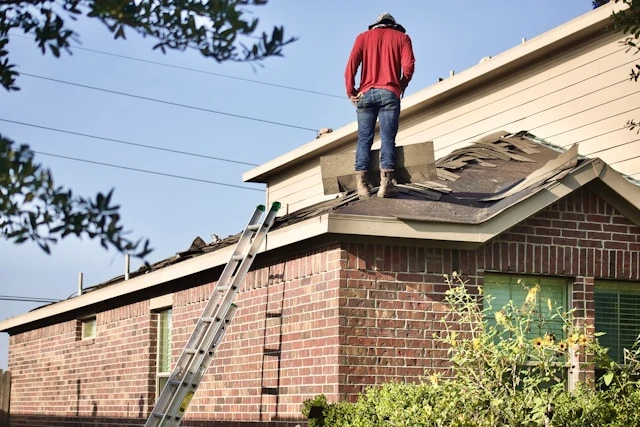
Roofs are the most common place where code and insurance overlap in San Antonio, because hail and wind damage so many of them. When a composition shingle roof is replaced, the new roof must meet the current IRC roofing provisions. Depending on the roof, that can involve:
- Drip edge at eaves and rakes, required for asphalt shingle roofs under recent IRC editions.
- Underlayment type and installation requirements.
- Limits on installing a new roof over existing layers. The IRC generally does not allow a recover over a roof that already has two or more layers, so tear-off may be required.
- Replacing deteriorated decking discovered after tear-off.
- Flashing and ventilation that meet current requirements and manufacturer instructions.
Electrical, plumbing, and energy items
When walls are opened after water or fire damage, inspectors may require work to meet current electrical or plumbing provisions in the repaired area. Replacing insulation can bring energy code requirements into play. Which upgrades apply depends on the scope of the repair and the code's rules for existing buildings, so ask the contractor and DSD for specifics, in writing where possible.
Older and historic homes
Many older San Antonio homes, including pier-and-beam houses in historic neighborhoods such as King William, Monte Vista, and Tobin Hill, were built long before current codes. Repairs to these homes can trigger more code work than a newer home would need. Properties in local historic districts may also need review of exterior changes by the city's Office of Historic Preservation, which can affect materials and timing. Factor that into the repair scope early.
Ordinance or law coverage: who pays for code upgrades?
This is the key point many homeowners miss: a code requirement does not automatically mean the insurer must pay for it. Whether code-related costs are covered depends on your ordinance or law coverage.
Ordinance or law coverage pays, up to its limit, for increased costs to comply with building codes when repairing covered damage. It is often a separate, limited coverage or an endorsement. Depending on the policy, it may help with:
| Type of cost | Example | Typical treatment |
|---|---|---|
| Increased cost of construction for the damaged portion | New code-required underlayment or drip edge on a covered roof replacement | Often covered up to the ordinance or law limit |
| Upgrades to undamaged portions required by code | Electrical upgrades in areas the storm did not damage | Depends on policy wording; may be limited or excluded |
| Demolition of undamaged portions | Removing undamaged parts of a building that must be rebuilt to code | Covered in some policies; check the form |
| Code items unrelated to the covered damage | Bringing the whole house up to current code after a small repair | Generally not covered |
Limits vary widely. Some policies include a modest amount of ordinance or law coverage, sometimes stated as a percentage of the dwelling limit; others require an endorsement, and some commercial policies split it into separate coverage parts. Check your declarations page and endorsements, and ask your agent if you are unsure.
Timing of payment
Many policies pay ordinance or law benefits only after the work is actually done, and some require that repairs be completed within a set time. Keep permits, inspection records, and invoices that show which costs were code-driven. If code items are part of a replacement cost claim, see our guide to replacement cost vs. actual cash value for how holdbacks work.
For buildings in mapped flood zones that are substantially damaged, NFIP flood policies include Increased Cost of Compliance coverage, which may help with certain required mitigation costs such as elevation. FloodSmart.gov explains how it works. See our guide to flash flood damage and insurance in San Antonio.
How to document code items on a claim
- Ask your contractor which items the permit and inspection will require, and get it in writing.
- Get a copy of the permit and any inspection results or correction notices.
- Identify code-driven line items separately in the estimate so the insurer can evaluate them under ordinance or law coverage.
- Photograph conditions found during the work, such as damaged decking after tear-off.
- Send the documentation to the insurer with a written request, and keep a log of responses.
If an insurer's estimate leaves out code items that the permit requires, our guide on how to review an underpaid roof insurance estimate explains how to raise them, and our insurance claim supplements page covers the supplement process.
Walking through a permitted roof replacement after a hail claim
To see how the pieces fit together, here is how a typical permitted roof replacement inside San Antonio city limits often unfolds after a covered hail claim. Details vary by contractor, insurer, and policy.
- The claim is inspected and an estimate issued. The insurer's estimate may or may not include code-driven items such as drip edge or specific underlayment.
- The homeowner hires a licensed contractor, who reviews the estimate and identifies items the permit and inspection will require.
- The contractor applies for the re-roof permit through DSD's online system before work begins.
- Tear-off reveals conditions, such as additional roof layers or deteriorated decking, that are photographed and reported to the insurer before they are covered up.
- The work is inspected as the permit requires, and any correction notices are addressed.
- The homeowner submits the final invoice, permit, and photos to the insurer to request recoverable depreciation and any ordinance or law benefits.
The most common mistake is waiting until the end to raise code items. Flagging them early, with documentation, gives the insurer a chance to evaluate them before the work is finished and avoids surprises when the final invoice comes in. If the insurer and the homeowner disagree on the amount of a code-related item, many policies allow either side to request appraisal of the amount of loss, while coverage questions remain separate.
Common disputes over code items
- "The code item is not storm damage." True in a sense, but it may still be payable under ordinance or law coverage when it is required to repair covered damage.
- "Your policy has no ordinance or law coverage." Check the declarations and all endorsements; sometimes the coverage is there under another name.
- "The upgrade is not required." A written statement from the contractor, a code citation, or an inspection correction notice can help.
- "The limit has been reached." Ask for a breakdown showing how the limit was applied.
Getting help
Code questions add another layer to an already complicated claim. San Antonio Public Adjuster, a service of Rise Public Adjusting LLC, helps property owners across San Antonio and Bexar County document code-related costs, review the policy's ordinance or law coverage, and present those items as part of the claim, along with roof damage insurance claims and other property losses. Public adjusters do not perform repairs on claims they adjust, so you will still work with your own licensed contractor. Fees are disclosed in a written contract before any work begins; Texas law caps public adjuster compensation at 10% of the insurance settlement. For legal questions, consult a Texas attorney.
Frequently Asked Questions
Which building codes has San Antonio adopted?
On January 30, 2025, the San Antonio City Council adopted the 2024 editions of the International Building Code, International Residential Code, International Existing Building Code, and other ICC codes, along with the 2021 International Energy Conservation Code and the 2023 National Electrical Code, with local amendments (Ord. No. 2025-01-30-0075). The city's Chapter 10 building-related codes document lists an effective date of May 1, 2025. Confirm current requirements with the Development Services Department.
Do I need a permit to replace my roof in San Antonio?
Generally, yes. The city's fee schedule includes a residential re-roof permit, and re-roofing and most structural repairs inside city limits require a permit through the Development Services Department. Suburban cities have their own permit offices. Your contractor should pull the permit and schedule inspections.
Does homeowners insurance pay for code upgrades?
Only to the extent your policy provides it. Ordinance or law coverage pays, up to its limit, for increased costs to comply with building codes when repairing covered damage. It is often a separate, limited coverage or endorsement. A code requirement alone does not mean the insurer must pay for the upgrade.
What is ordinance or law coverage?
It is coverage for the extra cost of meeting building codes and ordinances when repairing or rebuilding after a covered loss. Depending on the policy, it may include the cost of upgrading undamaged parts of the building, demolition of undamaged portions, and increased construction costs. Limits vary widely.
Do suburban cities around San Antonio use the same codes?
Not necessarily. Cities such as Alamo Heights, Leon Valley, Schertz, Boerne, and New Braunfels adopt their own codes and run their own permit offices, and unincorporated Bexar County has its own rules. Check with the jurisdiction where the property is located.
Should I start repairs before the insurer approves code items?
Emergency repairs to prevent further damage, such as tarping, should not wait. For permanent repairs, it usually helps to send the insurer the contractor's list of code-required items and give it a chance to respond, but repair timing also depends on your policy's deadlines and your situation. Keep records of everything you submit.
Sources and further reading
This article is general information about property insurance claims in Texas, not legal advice, and not a promise of any coverage or outcome. Your policy language and the facts of your loss control your claim.