Key takeaways
- The insurance adjuster (staff, independent, or catastrophe) works for the insurer. A public adjuster is licensed by TDI to represent you.
- You do not pay the insurer’s adjuster. A public adjuster is paid under a written contract, capped at 10% of the settlement in Texas, and you can cancel within 72 hours.
- Bexar County’s hail history (618 NOAA reports since 1957) means large storms can bring heavy adjuster caseloads and quick inspections.
- Small, fairly paid hail claims often do not need a public adjuster. Large, disputed, denied, or stalled claims are where one is most often considered.
- Neither type of adjuster can give you legal advice. For lawsuits or deadlines to sue, talk to a Texas attorney.
After a hailstorm, one of the first decisions you face is who will evaluate your damage. The insurance company will send its adjuster no matter what. The question is whether you also want someone on your side. Understanding public adjuster vs. insurance adjuster for hail claims in Texas helps you decide whether the insurer’s process is enough for your claim or whether outside help makes sense.
This guide explains who each adjuster works for, how they are paid, how each typically handles a hail claim in San Antonio, and how to decide what is right for you.
Why hail claims are so common in San Antonio
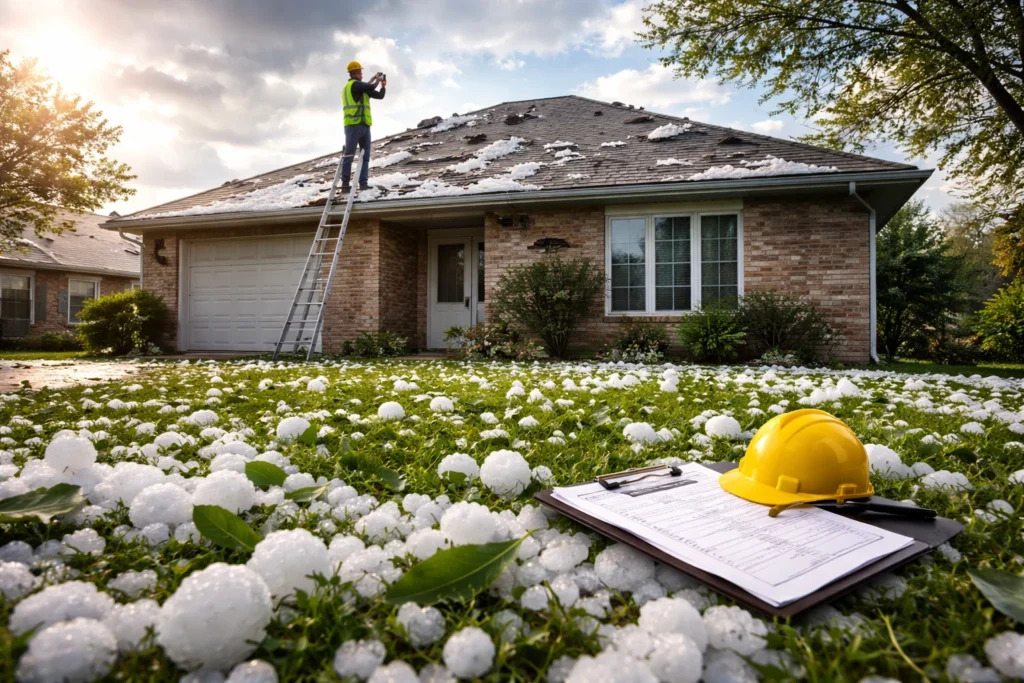
NOAA’s Storm Events Database records 618 hail reports in Bexar County since 1957, and 203 of them were golf ball size (1.75 inches) or larger. Most fall between March and May, with April the busiest month. Big events tend to produce many claims at once:
- May 6, 2001: hail up to 4 inches, described by NOAA as one of the most devastating hail-and-wind storms in Bexar County history.
- April 12, 2016: hail up to 4.5 inches across northwest San Antonio, widely reported as one of the costliest hailstorms in Texas history.
- May 3, 2021: 5.5-inch hail near Sayers and China Grove, the county’s largest on record.
After storms like these, insurers often bring in additional adjusters, and inspections can be fast. That is one reason it helps to understand the roles before the adjuster arrives.
What is an insurance adjuster?
The insurance adjuster investigates the claim for the insurer: inspecting the damage, applying the policy, writing an estimate (usually in Xactimate), and recommending payment. You will typically meet one of these:
- Staff adjusters are employees of the insurance company.
- Independent adjusters are contracted by the insurer, often through an adjusting firm.
- Catastrophe (CAT) adjusters are independent adjusters deployed after major storms to handle the surge in claims.
Insurance adjusters in Texas are licensed by TDI and are trained professionals. Their role is to resolve claims according to the policy and the insurer’s guidelines. You do not pay them directly.
What that looks like on a hail claim
- The insurer acknowledges the claim. Under Texas’s Prompt Payment of Claims law, it generally has 15 days after notice to acknowledge the claim, start the investigation, and request information.
- An adjuster inspects, sometimes in person on the roof, sometimes from the ground, by drone, or using photos.
- The adjuster writes an estimate and the insurer decides whether to accept or reject the claim.
- Payment is issued, usually actual cash value first under a replacement cost policy, with recoverable depreciation released after repairs.
What is a public adjuster?
A public adjuster is licensed by TDI under Insurance Code Chapter 4102 to represent the policyholder. Texas public adjuster contracts must use approved terms and state “WE REPRESENT THE INSURED ONLY.” A public adjuster on a hail claim typically:
- Reviews the policy, including the wind/hail deductible, roof coverage terms, and any cosmetic exclusion
- Inspects and documents the roof, soft metals, elevations, and interior
- Prepares a detailed line-item estimate
- Communicates with the insurer, attends reinspections, and submits supplements
- Reviews payments and depreciation holdbacks
Texas also limits what public adjusters can do. According to TDI, they cannot act as your contractor on the claim, give legal advice, solicit door to door during a natural disaster or after 9 p.m., take referral fees from contractors or attorneys involved in your claim, or keep you from talking with your insurer.

Side-by-side comparison
| Factor | Insurance adjuster | Public adjuster |
|---|---|---|
| Represents | The insurance company | You, the policyholder |
| Licensed by | Texas Department of Insurance | Texas Department of Insurance (Chapter 4102) |
| Who pays | The insurer | You, under a written contract; capped at 10% of the settlement |
| When involved | Every claim | Only if you hire one |
| Typical focus | Investigating and resolving the claim under the policy and company guidelines | Documenting and presenting the full claim for the policyholder |
| Contract protections | Not applicable | TDI-approved terms; 72-hour right to cancel |
| Can give legal advice? | No | No |
| Can do your repairs? | No | No, not on a claim they adjust |
Where hail claims commonly go wrong
Disagreements on hail claims usually come down to a few issues, regardless of who is adjusting:
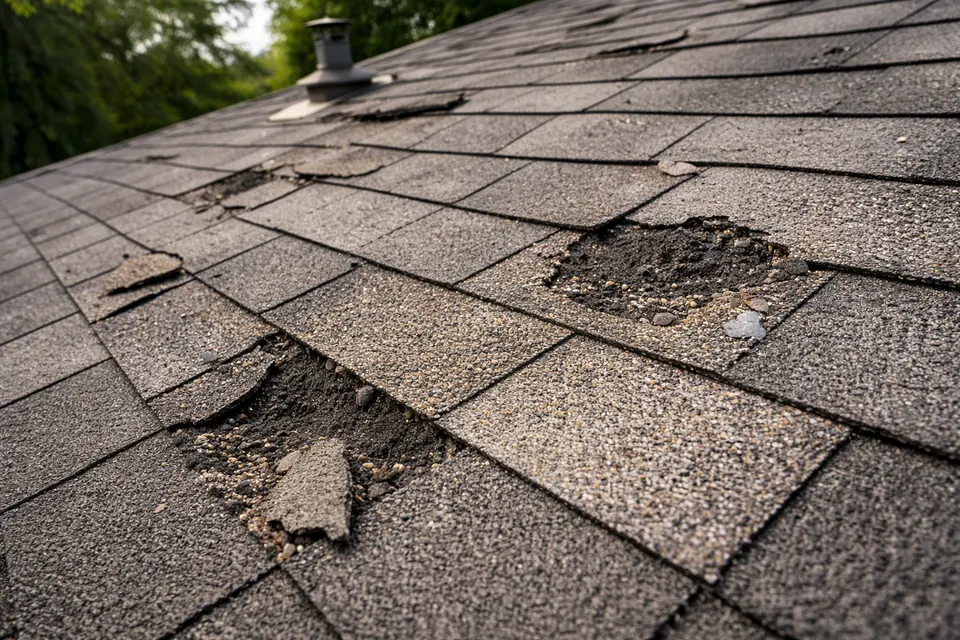
- Damage not seen. Bruised shingles, broken seals, and granule loss can be hard to see, especially in a quick inspection or from the ground.
- Cause disputes. The insurer attributes marks to wear, blistering, or foot traffic rather than hail.
- Repair versus replace. Only a few slopes are approved, or a spot repair is approved on shingles that may not be repairable.
- Missing line items. Starter, drip edge, flashing, vents, waste, steep charges, and soft metals. See what carriers miss in their scope.
- Depreciation and policy terms. ACV roof endorsements, roof payment schedules, cosmetic exclusions, and percentage wind/hail deductibles can surprise homeowners.
Pros and cons of each approach
Working only with the insurance adjuster
- Pros: No added fee. Often simpler and faster for small, clear claims.
- Cons: You are responsible for documenting the damage, reviewing the estimate, and raising disagreements yourself.
Hiring a public adjuster
- Pros: A licensed representative handles documentation, estimates, and communication. Useful on large, complex, denied, or stalled claims.
- Cons: The fee reduces your net recovery. The process may take longer as the claim is fully documented. And there is no guarantee the insurer will pay more.
The same hail claim, handled two ways
Here is a simplified, hypothetical illustration of how the process can differ. It is not a prediction of any result.
Without outside help. A homeowner in Leon Valley reports hail damage after a spring storm. A catastrophe adjuster inspects the roof in under an hour, approves two slopes and the front gutters, and sends an estimate. The homeowner compares it with a roofer’s bid, sees a large difference, and calls the adjuster. The homeowner then gathers photos, asks the roofer for a written explanation of the missing items, and sends a supplement request. This can work well, especially when the homeowner is organized and has time.
With a public adjuster. The same homeowner hires a public adjuster after receiving the estimate. The adjuster reviews the policy, inspects every slope and soft metal item, measures the roof, documents interior stains, and prepares a line-item estimate in the same format as the insurer’s. The adjuster submits it with photos and explanations, requests a reinspection, and handles follow-up. The homeowner still decides whether to accept any offer and still pays the deductible, plus the contract fee from the settlement.
In both versions, the insurer makes the payment decision under the policy. The difference is who does the documentation and follow-up, and at what cost.
Local construction affects every hail inspection
San Antonio’s housing stock shapes what any adjuster should look at. Composition shingle roofs are the most common, and their hail damage is often subtle. Standing-seam metal roofs, more common toward the Hill Country edge in places like Boerne and Helotes, may raise cosmetic-versus-functional questions. Two-story homes in newer subdivisions add steep and high-roof labor. Brick, limestone, and stucco exteriors can hide chips and spatter. Flat and low-slope commercial roofs need membrane, drain, and rooftop unit inspections. An adjuster who accounts for how the building is actually built is more likely to produce a complete estimate. See our roof damage insurance claims page for more.
How to decide
Ask yourself:
- Is the damage limited and the estimate close to your roofer’s? If so, you may not need help.
- Is the gap between the insurer’s estimate and the contractor’s scope large, or were whole slopes left out?
- Was the claim denied, partially denied, or closed as below the deductible?
- Has the claim stalled, with repeated requests for the same information?
- Do you have the time to document, compare estimates, and follow up for weeks?
If you answered yes to questions 2 through 4, or no to question 5, a second opinion may be worth it. Our article do I need a public adjuster? goes deeper, and how to find a public adjuster explains how to verify a license and review the contract.
What you should do either way
- Document early. Photograph the roof, gutters, vents, screens, AC unit, and interior before repairs. See how to document hail damage and the claim documentation checklist.
- Check the storm date. Our storm lookup tool shows NOAA reports near your address.
- Be present for inspections and point out everything you found.
- Get the full estimate and compare it line by line with a contractor’s scope.
- Know your policy: wind/hail deductible, replacement cost vs. actual cash value, and any roof endorsements.
- Keep a log of every call, email, and inspection.
Texas protections to know
Fees are disclosed in a written contract before any work begins; Texas law caps public adjuster compensation at 10% of the insurance settlement. If the insurer pays or commits in writing to pay policy limits within 72 hours after the loss is reported, the adjuster cannot take a percentage fee. You can cancel a public adjuster contract within 72 hours of signing. If you have a problem with any adjuster or insurer, you can contact TDI at 800-252-3439.
For disagreements about the amount of loss, most policies include an appraisal clause. For disputes about coverage, lawsuits, or deadlines to sue, consult a Texas attorney.
The bottom line
The insurance adjuster is part of every claim. A public adjuster is optional. For a small, straightforward hail claim, working directly with your insurer may be all you need. For a large, disputed, or denied claim, having a licensed representative can help make sure the damage is fully documented and clearly presented. San Antonio Public Adjuster serves San Antonio, Bexar County, and surrounding communities; learn more about our hail damage claim help or request a free claim review.
Frequently Asked Questions
What is the main difference between a public adjuster and an insurance adjuster?
An insurance adjuster (staff or independent) evaluates the claim for the insurance company. A public adjuster is licensed by the Texas Department of Insurance to represent the policyholder, and Texas public adjuster contracts must state “WE REPRESENT THE INSURED ONLY.”
How much does a public adjuster charge in Texas?
Fees are disclosed in a written contract before any work begins; Texas law caps public adjuster compensation at 10% of the insurance settlement. TDI notes the fee can apply to the total settlement and that you may still owe a fee if the insurer does not increase its offer.
Do public adjusters increase hail claim payouts?
Sometimes a more complete estimate leads to a higher payment, and sometimes it does not. No one can guarantee a result. What a public adjuster can do is document the damage thoroughly, prepare a detailed estimate, and present it to the insurer.
Can I hire a public adjuster after the insurer’s adjuster has inspected?
Yes. Many homeowners hire one after the first estimate arrives or after a partial denial. You can also keep communicating with your insurer directly; TDI says a public adjuster cannot keep you from talking with your insurance company.
Is the insurance company’s adjuster biased?
Not necessarily. Many company adjusters are careful and fair. But they work for the insurer and follow its guidelines, and after a large storm they may have heavy caseloads and limited time per property.
Do I have to use the insurer’s adjuster?
The insurer will assign its own adjuster to investigate the claim regardless. Hiring a public adjuster does not replace that process; it gives you a licensed representative on your side of it.
Sources and further reading
This article is general information about property insurance claims in Texas, not legal advice, and not a promise of any coverage or outcome. Your policy language and the facts of your loss control your claim.