
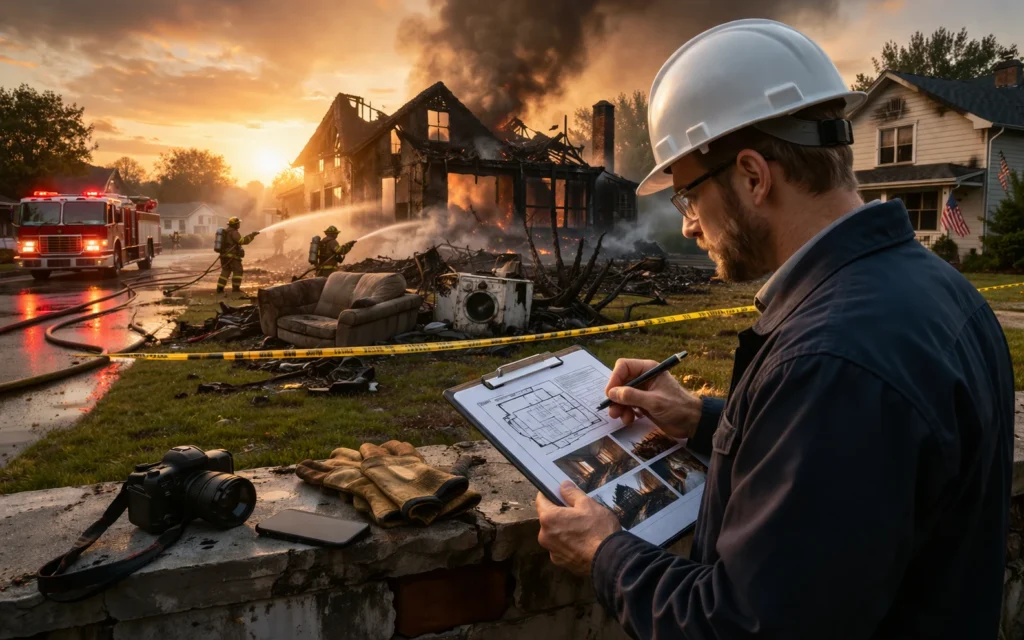
A fire doesn’t just damage your home it disrupts your life in seconds. One moment everything feels normal. The next, you’re dealing with smoke, loss, and uncertainty. And right in the middle of that chaos, you’ll likely meet a fire insurance adjuster.
Here’s the truth: who that adjuster works for and how you handle that relationship can significantly impact your final payout. I’ve seen homeowners accept far less than they deserved simply because they didn’t understand the process. You don’t have to make that mistake.
Let’s break it all down. Clearly. Practically. No fluff.
What Is a Fire Insurance Adjuster?
A fire insurance adjuster is a professional responsible for evaluating fire damage and determining how much the insurance company should pay on a claim. Sounds straightforward, right? It’s not always.
There are actually three types of adjusters you might encounter:
- Insurance Company Adjuster – Works directly for your insurer
- Independent Adjuster – Contracted by the insurance company
- Public Adjuster – Works for you, the policyholder
That distinction matters more than most people realize. Because at the end of the day, each adjuster has a different objective.
What Does a Fire Insurance Adjuster Actually Do?
A fire claim is not just about looking at burned walls. It’s a layered process. Detailed. Technical. Sometimes overwhelming.
Damage Assessment and Inspection
The first step? Inspection.
The adjuster walks through your property, documenting visible and hidden damage. This includes:
- Structural damage (walls, roof, foundation)
- Smoke and soot contamination
- Water damage from firefighting efforts
- Personal belongings
Here’s where it gets tricky. Not all damage is obvious. Smoke can seep into insulation. Heat can weaken structural integrity. If it’s missed early, it may never be included in your claim.
Documentation and Reporting
Next comes documentation. And this part is critical.
The adjuster prepares:
- Detailed damage reports
- Repair estimates
- Itemized lists of personal property losses
If something isn’t documented, it usually doesn’t get paid. It’s that simple.
Claim Evaluation and Settlement Recommendations
Now the numbers come into play.
The adjuster calculates:
- Replacement costs
- Depreciation
- Policy coverage limits
Then they recommend a settlement amount. That number becomes the foundation of your payout.
Interestingly, the process of evaluating damage can sometimes feel as complex and layered as something like apophenia where patterns are interpreted from scattered information. Except here, every detail must be grounded in real evidence, not assumptions.
Communication with Policyholders
Expect questions. Lots of them.
You may be asked for:
- Statements about the fire
- Proof of ownership
- Receipts or photos
How you respond and what you provide can influence your claim outcome.
Insurance Company Adjuster vs Public Adjuster After a Fire
Let’s get real for a moment.
Not all adjusters are on your side.
Key Differences
| Type of Adjuster | Who They Work For | Primary Goal |
| Company Adjuster | Insurance Company | Minimize payout |
| Independent Adjuster | Insurance Company | Control claim costs |
| Public Adjuster | You (Homeowner) | Maximize your settlement |
That’s not criticism. It’s structure.
Insurance company adjusters are doing their job. Public adjusters are doing a different job.
Why This Difference Matters
A company adjuster may:
- Overlook certain damages
- Apply lower repair estimates
- Interpret policy terms narrowly
A public adjuster? They push back. They document more. They negotiate harder.
And that often leads to higher settlements.
When to Consider Hiring a Public Adjuster
You should seriously consider it if:
- The damage is extensive
- Your claim feels underpaid
- The process is dragging
- You feel overwhelmed
Sometimes, having an advocate changes everything.
Step-by-Step: How a Fire Insurance Claim Works
Let’s walk through the real process. No guesswork.
Step 1 – Filing the Claim
Immediately after the fire:
- Contact your insurance company
- Secure the property if possible
- Start documenting damage
Time matters here. Delays can complicate your claim.
Step 2 – Initial Inspection
The fire insurance adjuster visits your property.
Expect:
- A walkthrough
- Photos and notes
- Questions about the incident
Be present. Pay attention.
Step 3 – Damage Documentation
This is your responsibility too.
Create:
- A full inventory of damaged items
- Photos and videos
- Receipts if available
The more detailed, the better.
Step 4 – Estimate and Review
You’ll receive an estimate.
Don’t rush it.
Review:
- What’s included
- What’s missing
- Whether values feel accurate
Step 5 – Negotiation and Settlement
Yes, negotiation is part of the process.
You can:
- Request revisions
- Submit additional evidence
- Challenge valuations
And you should. This is your money.
Common Mistakes Homeowners Make After a Fire
These happen all the time. Avoid them.
- Accepting the first settlement offer too quickly
- Failing to document every item
- Throwing away damaged property prematurely
- Not reading the insurance policy
- Relying solely on the insurance company’s adjuster
Each mistake can cost you. Sometimes thousands. Sometimes more.
How a Fire Insurance Adjuster Impacts Your Settlement
Let’s talk about influence.
Because the fire insurance adjuster plays a major role in what you receive.
Valuation of Property and Repairs
Two key terms:
- Replacement Cost – Cost to replace items new
- Actual Cash Value – Replacement cost minus depreciation
The difference? Huge.
Scope of Damage Included
If damage isn’t included, it isn’t paid.
That includes:
- Smoke damage
- Hidden structural issues
- Secondary water damage
Negotiation Leverage
Adjusters shape the starting number.
From there, everything is a negotiation.
Signs You Need a Public Fire Insurance Adjuster
Not every claim needs one. But many do.
Look for these signs:
- Your claim is delayed without clear reason
- You received a low settlement offer
- Damage is extensive or complex
- You don’t understand the process
- You want a second opinion
If any of these apply, it’s worth exploring your options.
How to Choose the Right Fire Insurance Adjuster in San Antonio
Not all adjusters are equal. Choose carefully.
Licensing and Credentials
In Texas, public adjusters must be licensed. Always verify.
Experience with Fire Claims
Ask:
- How many fire claims have you handled?
- What were the outcomes?
Experience matters. A lot.
Fee Structure
Most public adjusters work on contingency.
That means:
- No upfront cost
- They get paid a percentage of your settlement
Local Knowledge Matters
San Antonio isn’t just any market.
A local expert understands:
- Building costs
- Local contractors
- Regional insurance trends
That insight can make a real difference.
What to Expect When Working with a Public Adjuster
If you hire one, here’s how it typically goes:
- Initial consultation – Review your policy and damage
- Independent inspection – A second, more detailed assessment
- Claim preparation – Documentation, estimates, reports
- Negotiation – Back-and-forth with the insurance company
- Final settlement – Ideally higher than initial offer
It’s a structured process. And it removes a lot of stress.
Fire Damage Beyond the Flames: Hidden Issues Adjusters Look For
Fire damage isn’t always visible.
Some of the most expensive problems are hidden:
- Smoke infiltration inside walls
- Lingering odor contamination
- Electrical system damage
- HVAC contamination
- Structural weakening from heat
If these aren’t identified early, they can become your problem later. Not the insurance company’s.
How to Maximize Your Fire Insurance Claim
This is where you take control.
Document Everything
Take photos. Lots of them.
Before cleanup. During cleanup. After cleanup.
Understand Your Policy
Know:
- Coverage limits
- Exclusions
- Deductibles
If you don’t understand it, ask.
Don’t Rush Settlements
Fast money can be tempting. I get it.
But incomplete claims cost more in the long run.
Consider Professional Help
A public adjuster can:
- Increase accuracy
- Strengthen your claim
- Improve your final payout
Sometimes, that difference is substantial.
Why San Antonio Homeowners Turn to Public Adjusters
There’s a reason more homeowners in San Antonio are seeking help.
- Complex claims are becoming more common
- Insurance companies are tightening payouts
- Property values and repair costs are rising
And people are realizing something important:
Handling a fire claim alone is possible.
But handling it well? That’s another story.
Conclusion: Protect Your Claim, Protect Your Future
A fire changes everything. Fast.
And in the middle of that disruption, decisions matter. Big ones.
Working with a fire insurance adjuster and understanding exactly how they operate—can be the difference between a fair settlement and a frustrating one. You don’t have to navigate it blindly. You don’t have to accept less than you deserve.
Take your time. Ask questions. Document everything.
And if the process feels overwhelming, get help. The right guidance doesn’t just reduce stress—it can significantly increase your outcome.
Because at the end of the day, this isn’t just about a claim.
It’s about rebuilding your home. Your stability. Your life.
FAQs
A fire insurance adjuster inspects property damage, evaluates losses, and determines how much the insurance company should pay on a claim.
Not always insurance company adjusters work for the insurer, while public adjusters represent your interests as the policyholder.
Typically within a few days after filing your claim, though timelines can vary depending on the insurer and severity of the fire.
Yes, you can challenge estimates, submit additional documentation, and request a higher settlement if the offer seems too low.
No, it’s best to review the offer carefully, as initial settlements may not fully account for all damages or hidden issues.
Replacement cost covers the full cost to replace items, while actual cash value deducts depreciation, resulting in a lower payout.
You should consider hiring one if your claim is complex, underpaid, delayed, or if you feel overwhelmed handling the process alone.
Most public adjusters charge a contingency fee, usually a percentage of the final settlement, meaning no upfront payment is required.
You’ll need photos, a detailed inventory of damaged items, receipts if available, and any reports related to the fire.
It can take anywhere from a few weeks to several months, depending on the complexity of the damage and negotiations involved.