
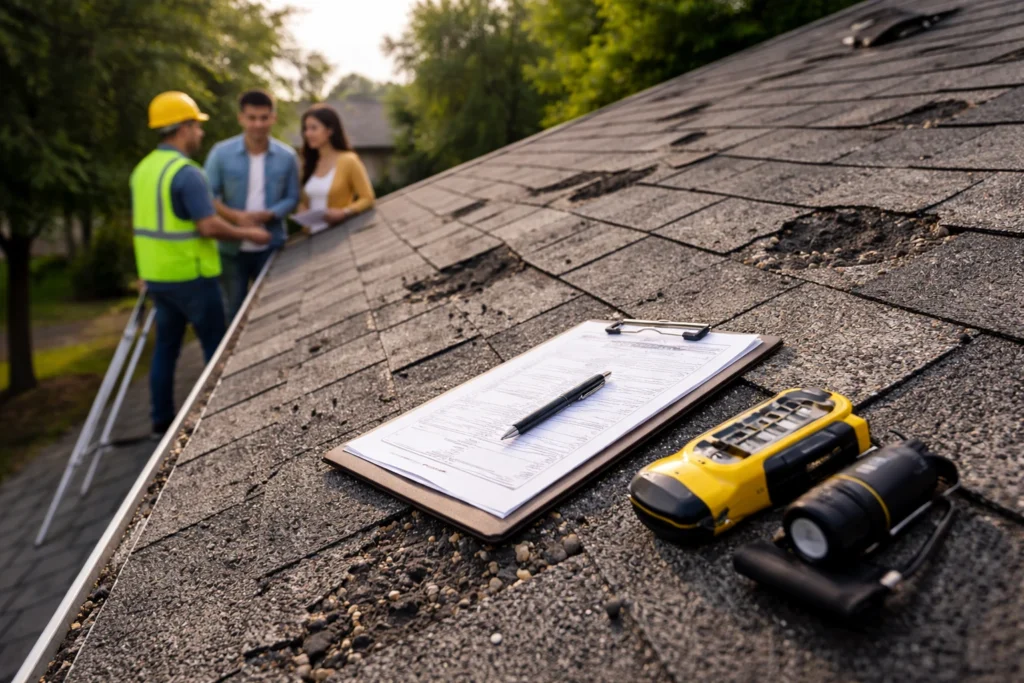
A hailstorm doesn’t politely knock on your door. It hits hard. Fast. And when it’s over, you’re left staring at damage that may not even be fully visible yet. That’s where things get serious. Right after the storm, you’re faced with one of the most important decisions in the entire claims process: Public Adjuster vs. Insurance Adjuster for Hail Claims in Texas. It sounds like a simple comparison. It isn’t.
I’ve seen homeowners accept a quick inspection and a fast payout, thinking everything is handled. Months later, leaks appear. Repairs cost more than expected. The original claim suddenly feels… incomplete. Then there are homeowners who take a different route. They question the estimate. They bring in expertise. They push for accuracy. And in many cases, they walk away with significantly higher settlements.
Same storm. Same damage. Different outcomes. This article breaks it all down. No filler. Just clear, practical insight so you can decide who should handle your hail claim and how to protect your financial outcome.
Understanding Hail Damage Claims in Texas
Why Hail Damage Is So Common in Texas
Texas is one of the most hail-prone states in the country. That’s not speculation it’s reality. The combination of warm Gulf air and cold atmospheric fronts creates ideal conditions for severe storms. These systems build quickly. They intensify even faster. And when hail forms, it can reach destructive sizes in minutes.
Cities like San Antonio, Dallas, Austin, and Fort Worth are regularly impacted and homeowners in San Antonio often deal with repeated hail exposure year after year. That frequency matters. Because even minor storms can cause cumulative damage over time.
Types of Hail Damage You Might Not Notice
Most homeowners look for obvious signs broken shingles, dented gutters, cracked windows. But hail damage often hides beneath the surface.
Here’s what’s commonly missed:
- Granule loss on shingles, reducing roof lifespan
- Bruising beneath shingles, weakening structural integrity
- Microfractures in flashing and vents
- Seal damage around windows and doors
At first glance, everything looks fine. Months later, problems appear. And by then, proving storm-related damage becomes harder.
Why Hail Claims Get Underpaid or Denied
This is where frustration sets in.
Common reasons claims fall short:
- Adjusters overlook subtle damage
- Estimates exclude key repair items
- Depreciation reduces payout significantly
- Insurers argue damage is from wear and tear, not hail
This is exactly why understanding Public Adjuster vs. Insurance Adjuster for Hail Claims in Texas is so important. Because who evaluates your claim directly impacts what gets paid.
What Is an Insurance Adjuster?
Their Role in Your Claim
An insurance adjuster is assigned by your insurance company.
Their responsibility:
- Inspect the damage
- Assess repair costs
- Determine claim payout
They are trained professionals. No question about that. But they work for the insurance company not for you.
Types of Insurance Adjusters
Not all adjusters operate the same way:
- Staff Adjusters – Full-time employees of the insurer
- Independent Adjusters – Contractors hired during busy periods
- CAT Adjusters – Deployed after major storms, often handling dozens of claims per week
After a major hailstorm, CAT adjusters are common. And they’re often under pressure to move quickly.
How Insurance Adjusters Handle Hail Claims
The process is efficient:
- Schedule inspection
- Conduct a walkthrough
- Take photos
- Create estimate using software
- Issue settlement
Efficiency is good. But it can come at the cost of detail.
Pros of Insurance Adjusters
- No direct cost to you
- Faster response time
- Built-in connection to the insurer
Limitations to Be Aware Of
Here’s the reality. Insurance adjusters operate within guidelines set by the insurer. Their goal is to resolve claims but also to control costs.
This can lead to:
- Shorter inspections
- Missed damage
- Lower estimates
What Is a Public Adjuster?
Who They Work For
A public adjuster represents you. Period. They are licensed professionals who advocate for the policyholder not the insurance company.
What They Actually Do
A public adjuster’s approach is more detailed and methodical:
- Perform a comprehensive inspection
- Document all damage thoroughly
- Build a detailed claim estimate
- Communicate directly with the insurer
- Negotiate for a higher payout
They slow things down in a good way.
How Public Adjusters Get Paid
Most operate on contingency:
- Typically 10% of the final settlement
- No upfront cost
Advantages of Hiring a Public Adjuster
- More detailed inspections
- Better documentation
- Stronger negotiating position
- Reduced stress for homeowners
Potential Downsides
- Fee reduces your final payout
- Not necessary for every claim
Key Differences: Public Adjuster vs. Insurance Adjuster
Quick Comparison Table
| Factor | Public Adjuster | Insurance Adjuster |
| Represents | Homeowner | Insurance company |
| Goal | Maximize payout | Control costs |
| Paid by | % of claim | Insurer |
| Inspection depth | Thorough | Often limited |
| Negotiation | Yes | Limited |
Best Situations
- Large claims
- Denied claims
- Underpaid claims
- Complex damage
This is especially true for homeowners in San Antonio, where frequent hailstorms can lead to more complex and disputed claims over time.
Where Things Go Wrong
Problems often arise in the details:
- Missing line items
- Underestimated materials
- Excluded repairs
- Depreciation disputes
This is where deeper claim analysis becomes critical. In fact, many professionals dive into advanced breakdowns similar to what’s discussed in Hail Damage Claim Supplements What Carriers Miss in Their Scope Xactimate Insights, where overlooked line items and pricing discrepancies can significantly impact the final settlement.
Understanding Estimate Gaps
The gap between contractor estimates and insurance estimates isn’t random. In some ways, the process resembles complex systems studied in Chaos theory where small differences in input can lead to dramatically different outcomes.
The Role of Documentation in Winning Claims

Documentation is everything.
What Strong Documentation Includes
- Clear, high-resolution photos
- Detailed measurements
- Notes on all visible and hidden damage
- Weather data supporting the claim
Why Public Adjusters Have an Edge
They don’t rely on quick inspections.
They build a case.
Common Mistakes Homeowners Make
Avoid these pitfalls:
- Accepting the first offer too quickly
- Not documenting damage immediately
- Waiting too long to file
- Not reviewing the policy carefully
Texas Laws and Regulations
Texas requires:
- Licensed public adjusters
- Transparent contracts
- Consumer protections
Real-World Scenario Comparison
Insurance Adjuster Only
- Faster
- Lower payout
Public Adjuster Involved
- Slower
- Higher payout
Final Verdict
When comparing Public Adjuster vs. Insurance Adjuster for Hail Claims in Texas, the right choice depends on your situation.
Conclusion
Hail claims are financial decisions. Big ones. For homeowners in San Antonio, making the right choice early can mean the difference between a partial payout and a fully covered restoration. Take control. Ask questions. And don’t settle for less than what your policy allows. Hail claims are financial decisions. Big ones. Choose carefully.
FAQs
A public adjuster represents the homeowner, while an insurance adjuster represents the insurance company.
Yes, they often uncover overlooked damage and negotiate for a higher, more accurate settlement.
Most public adjusters charge a contingency fee, typically between 10% of the final claim amount.
Yes, you can hire a public adjuster at almost any stage of the claims process.
You should consider one if your claim is large, complex, denied, or seems underpaid.
They are not necessarily biased, but they work for the insurer and must follow company guidelines.
You can appeal the decision, provide additional documentation, or hire a public adjuster to reopen the claim.
It can take anywhere from a few weeks to several months depending on the complexity of the claim.
In many cases, the increased settlement outweighs the fee, especially for larger claims.
Look for proper licensing, strong reviews, relevant experience, and a clear, transparent fee agreement.